The Network

The Network
This blog is no longer updated. Please click the picture to hop across to The Network

Friday, September 30, 2005

A promise not worth the paper it's written on

We frequently see pictures and videos of John Howard going for his morning walk. We've seen him in Washington and London and other junketing venues around the world. A seldom talked about matter are his other forms of exercise - his flexibility gained by twisting and turning and backflipping on the policy front.

Looks like more exercise is being gained with his 'promise' to give $4,000 to workers who wish to pursue a case for unfair dismissal. The facts are this promise is similar to many promises of funds by the Howard Government - few will qualify and few will collect. The only significant thing to come from this promise - which will probably turn out to be non-core - is that it is a tiny chink in the government's armour. It is a small but de facto recognition of the sheer injustice of the government's proposed changes to industrial relations law and, in particular, the proposal to rule out unfair dismissal claims for those who work for firms employing under 100 people.

Jean Charles de Menezes


The family of Jean Charles Menezes, the Brazilian shot dead because he was thought to be a terrorist, has met with British police. A report of the meeting is here. They wait for justice.

Thursday, September 29, 2005

The Demons are angels


The Melbourne Football Club, known to its fans as The Demons, are to be applauded. See here for how they are honouring their mate Troy Broadbridge who perished in the tsunami in Thailand while on honeymoon with his wife, Trisha. And they are doing it without alcohol. 'On ya fellas. Your an example to us all. For details about the Reach Broadbridge Fund see here.

Forces of reform...oops, I mean reaction!


The Howard Government's proposed industrial relations changes are losing support, it would seem, day by day. The unions, the churches, and now the academic economists are expressing concern about the proposals for so-called industrial relations reform. Professor Mark Wooden, Deputy Director of the Melbourne Institute of Applied Economics and Social Research at the University of Melbourne, has raised a number of concerns in a speech to the Economic Society of Australia which can be seen here.

The price of people without a job


Economics is an inexact science in spite of propaganda which would suggest it has perfect crystal ball predicitive qualities. James Galbraith seems to have pointed out that fact when speaking to the Economic Society of Australia at the University of Melbourne this week. Galbraith claims that countries with lower minimum wages and higher levels of income inequality tend to have higher unemployment rates, as low-skilled workers chase a diminished pool of well-paying jobs. Read more here. This is contrary to the neo-classicism views of conservative politicians and economists and the business people who support them. Their idea is to keep shrinking unemployment keep on lowering wages.

Funny thing is the neoclassicists don't seem to get the idea that is quite visible across millennia that one could get to slavery and still not clear the labour market of unemployment.

Wednesday, September 28, 2005

The Index of Prohibited Books

The most infamous list of banned books was that maintained by the Roman Catholic Church from 1557-1966. Learn more about this here. The Catholic Church may no longer maintain the index but it still bans writers. Here you will find a discussion about some of the writers who have been banned in the latter part of the twentieth century. Others that come to mind who are not named in this article, are Pierre Teilhard de Chardin, Hans Kung, and Leonardo Boff.

The church has always exercised authority in relation to the protection of sound doctrine and the eradication of heresy. It is, arguably, a role extended to the Apostles and continued with authority within the Body of Christ. One does wonder at times. The church, irrespective of denomination, is not good at selecting what is timeless and true. It frequently rails and rants against books, teachings, thoughts, ideas which later generations have to back-pedal on. Perhaps, for instance, wider access to the writings of de Chardin might have given the church a more authoritative role in what was to become a burgeoning environmental movement. Instead, the leadership of the movement came from science and the world-wide church had to play catch up.

Take a book....and think for yourself

The American Library Assocation is celebrating Banned Books Week and encouraging people to read a banned book. They have published a list of the 100 most frequently challenged books. The list is a horror. I think of the tears I shed over A day no pigs would die. The biographical books of the beloved Maya Angelou and my discovery of the magnificent Noble Laureate Toni Morrison. And perhaps the greatest horror - a Mem Fox book is on the list! Mem is one of Australia's great treasures and a grand dame of literacy. Find my words about her over at The Trad Pad.

I don't know why these books have been challenged or by whom. I do know though that frequently and historically certain types or sects of Christians are in the vanguard of the book banning stakes. Frequently such people are in the vanguard of those who would impede intellectual liberty - particularly in relation to literature and a view of creation based on a narrow interpretation of the Book of Genesis. History is seldom, if ever, on their side and makes a mockery of their attempts to turn back the intellectual tide. Their religious history once demanded a freedom to read and judge a particular book for themselves - but henceforth they are happy to deny such freedom to others.

There is one way to know good literature from bad; good argument from bad - and that is to read widely, explore widely. Then one is able to sift the wheat from the chaff in exactly the same way that those who call themselves Christians will one day be sifted: nutritious grain from sterile chaff.

Saturday, September 24, 2005

Lies, damned lies, and statistics


At long last there are some sort of statistics on underemployment. What is underemployment?
Underemployment is when people have some sort of work but
  • have the capacity to work longer hours
  • this work does not fully utilize their education and skills within either their job or within the broader economy

More formal definitions from the OECD are available here.

The Australian Bureau of Statistics does not collect statistics on underemployment. Prior to this study, statistics on underemployment in Australia have been the result of educated guesses. In fact, such statistics that are collected are untrue. They - like so many economic theories and indicators - are based on a lie. The Big Lie is the basic definition of employment. The official definition of employment is:

People are considered to be employed if they were in paid work, or helping in a family business, for one hour or more in the reference week.

This definition is extensive in its application. It is used internationally by the OECD and is based on their definition.

Consequences of underemployment can be:

  • inability to build skills
  • lack of access to on-going training
  • lack of access to further education
  • lack of promotion
  • continuing dependence on social security benefits
  • inability to build a sustaining retirement income
  • inability to attract finance for housing or motor vehicles
  • inability to repay HECS debts
  • inability to contribute to community capital

I can remember a time when underemployment was discussed in this country but discussed as applying to India with its huge population and underlying economic difficulties. Underemployment in their own country was not something of which Australians were conscious - unless some forward thinking people considered the low participation of females in the workforce.

Let's stop the lies and lobby our politicians and bureaucrats to collect official statistics on underemployment, now.

Poverty and the Bible


Study poverty and the treatment of and justice for the poor in the bible at this site.

An Aussie view


Friday, September 23, 2005

Blogs, bloggers and dissidents


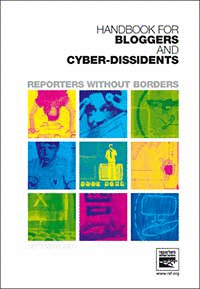
Reporters san frontiers have published a handbook for bloggers and cyber-dissidents. Longlive the democracy of the net.

Thursday, September 22, 2005

Waiting on God : Waiting on People


Be listening to Radio National next Sunday night at 6.10pm when Rachel Kohn speaks to Dave Andrews.

Dave Andrews is the founder of The Waiters' Union which hangs out in West End, Brisbane. The WU was founded as a non-formal network of spiritually minded activists who serve the homeless and the needy in the streets of West End. Dave and Ange Andrews, are dedicated to a "Christ-like" life of reaching out to the marginal people in society. Dave will be remembered for his book ChristiAnarchy - which caused quite a stir not only for its advocacy of a radical Christian lifestyle but for kicking off the book with some solid criticism of YWAM based on his own long-term personal experience.

Creation Care: A Prayer*


Creating God, you have given us a vision of a new heaven and a new earth ...
Resources conserved
Earth tended
Atmosphere cleansed
Trees planted
Injustice ended
Oceans teeming
Nations at peace

Creator, Redeemer, Sustainer
Alert nations, enthuse churches,
Receive our commitment and so entwine our lives with Your purpose
Earth and heaven will then sing of your glory.

Amen

*Poem found at Oikonomia, which Matt Stone found at Eco-Congregation which was found by Jen and I am now passing it on. If you wish to pass it on, please pass on the provenance with a link back to me as I have linked back to Jen and Jen has..... and so on.

The 100 minute read for your life


So what is this Christianity, this Jesus person, all about? Take 100 minutes to find out. This is the abridged version. Make a decision. Read the big book for grown-ups for yourself.

Petrol for the poor


High petrol prices are hitting everyone. The urban rich are reportedly ditching their four-wheel drives. The other side of the coin is charities issuing ever larger amounts for petrol vouchers to enable the working poor to get to work.

The death of the death of God?


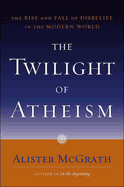
Interesting and challenging book reviews here concerning the revitalization of Christianity and the newfound relevance of religion and the decline and perceived irrelevance of atheism. Two comments I would make.
  1. Concerning post-modernism being in league with the newly relevant and revitalized Christianity: While it is noted that for sometime evangelicals have looked to post-modernist discourse in missional analysis, one is reminded of the influence on Christianity of previous non-christian philosophies such as neo-platonism.
  2. Atheism is a religion with many denominations.

Wednesday, September 21, 2005

Never lose an opportunity to drive down the poor


Can you beat it?! Poverty played a great part in the dispossession of victims of Hurricane Katrina. Looks like it is set to play a continuing role in the rebuilding of the south. Cut the taxes of the rich and the wages of the poor - seems to be the motto of American decision makers.

Tuesday, September 20, 2005

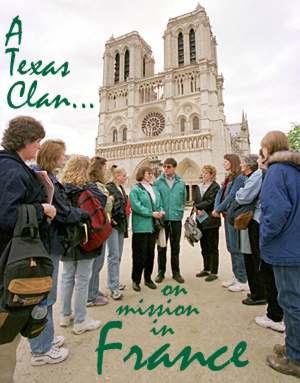
Go into the whole of Paris and preach the gospel!?

Tourists? Missionaries?

This report indicates that the importance of France as a missionary target is because France is so secular. I won't argue with that because France has been trying for over two hundred years to be secular.What I contend with is that there is no one within France's own borders to preach the gospel? Not even the late Brother Roger of Taize, where tens of thousands of young people turn up? Phooey.

I believe that, like Christians in so much of the western world, would-be missionaries want to have their cake and eat it too. Saving souls in a country with good fashion, good beaches, good wine, and good food and beautiful scenery and a useful language to learn sure beats the wilds of Papua New Guinea and the desertification of Kenya. The article doesn't mention the age of the missionaries to France but that could give some additional insights - probably into a generation that considers itself post-modern.
In Australia, we have a third, fourth, fifth world country in the midst of our First World economy. We have young people who are cut off from their own culture and spirituality and far from inclusion in the mainstream of white society. For someone concerned with tackling the spiritual void in the life of another, I thought this would be just the place. There would be the option of going with a missionary agency or of going as a tent-maker and living in a small outback town. One might even get to be a reconciler - a bridge between colonized indigenous people and the dominant colonizers. One might actually learn another language - not spoken by as many people as French but you would become a vital link in maintaining that language and its contribution to indigenous culture. Not only that, one might get to look at one's own country, environment through the eyes of one of the oldest, if not the oldest, living cultures on earth. As a tent-maker one could earn good wages and still be in touch with one's extended family - they could visit you and you them much more easily than with an overseas posting.

But the Australian Outback is challenging: to comfort, to ideas of dominating the landscape. It is not comfortable - the threads of Western culture and civilization become quite attenuated out there. Years there makes commonality with white urban communities who know nothing of your experience very difficult.

So Christian communities in the Australian Outback struggle. Struggle with tiny numbers. Struggle to get decent music with which to sing God's praises. Struggle to do anything meaningful to evangelize their own young people let alone the community's. In my experience, the smaller communities outside major towns are not well networked into the wider Christian community - even within their own denominations.

With the exception of two institutions that cater to theology for indigenous Australians an one Assemblies of God college (one of which, as far as I am aware, award degrees), there is no theological institution north of the Tropic of Capricorn in Australia. There is no institution that awards Christians for deeper study within and relating to their own environment. But from Australia, too, missionaries go to Paris.

One thing leads to another....


What a coincidence - Bonhoeffer and Neimoller on the same day. So I thought I would have to post on that blessed man, Karl Barth. Barth along with Bonhoeffer and Neimoller formed the Confessing Church in Nazi Germany. This Christian community came to life with the Barmen Declaration of 1934. The Barmen Declaration has always been interesting reading but it is well to read it to-day - when the American Empire is involved in a war built on lies in Iraq; when the USA, Europe, and Australia step up security within their borders and upon their citizens; and a large section of the US polity has taken its religion and its politics right and seeks to flex its political muscle, particularly on a President who sympathises with them.

The thing that is magnificent about the Barmen Declaration is its absolute simplicity. The scriptures it enunciates are simple and straightforward. The dominanting message is Jesus is Lord.

As those who profess to be dedicated to the preaching of the gospel seek political power and influence;
as Christians show, in general, no discernable difference from the rest of the comfortable western population in their support of consumer driven, individualistic, sensuous behaviour;
as Christians allow themsevels to be silenced on topics of justice and righteousness for the sake of personal financial survival and advancement;
as Christians, along with the rest of the population, seek their own security by giving their governments permission to restrict freedoms on a wide and deep scale, permission to wage war, and permission to marginalise people who can been seen as "The Other" -
it is well to dwell on the prophetic nature of what was done in 1934 when the Nazis were still bright and shiny and seen as Germany's great hope. In 1934, the Nazi's worst atrocities were still to come and beyond imagination.

Yet these men of God got the issue right. They, through prophetic insight, went to the very heart of the matter. And this remained, through grave atrocities and threats to humanity, the very heart of the matter through the next eleven years until the Third Reich disintegrated. The issue is what or who is at the centre of an individual's life. The issue is who or what governs and directs an individual's life. The issue is who or what does an individual treasure. The issue is who or what does an individual choose.

Lordship is the issue. To these questions, the answer is simple when the answer is Jesus is Lord.

The answer is complicated when in an individual's heart of hearts the answer is subject to self-centredness and self-satisfaction; individualism; personal security at the expense of others; possessions and their accumulation; personal beauty; sexuality; power and dominance.

The answer is complicated when sacrificial love; care for one another irrespective of differences of any kind; and striving for structural, community and personal justice is excluded.

Choose this day whom you will serve.

Do we learn from experience?


In the recent arrest and deportation of Scott Parkin, I have thought over and over again of these words of Martin Niemoller because, you see, I didn't notice any visible protest from Christians.

When the Nazis arrested the Communists,I said nothing;
after all, I was not a Communist.
When they locked up the Social Democrats,I said nothing;
after all, I was not a Social Democrat.
When they arrested the trade unionists,I said nothing;
afterall, I was not a trade unionist.
When they arrested the Jews, I said nothing;
after all, I was not a Jew.
When they arrested me, there was no longer anyone who could protest.