The Network

The Network
This blog is no longer updated. Please click the picture to hop across to The Network

Monday, April 10, 2006

Vaile, venality and vacuity


His written statement addressed 21 diplomatic cables about suspected irregularities in AWB contracts, and 21 times he said: "I have no recollection of receiving or reading this cable."

This is the summation of Mark Vaile's evidence given to-day at the Cole Inquiry into the oil-for-food scandal uncovered by the United Nations which showed AWB, Australia's single-desk wheat seller, was the biggest subscriber, through bribery sometimes known as 'facilitation fees', to Saddam Hussein's coffers.

It appears from to-day's evidence that - if the Cole Inquiry's Terms of Reference allowed it - it would be possible to draw a conclusion that Mark Vaile, Deputy Prime Minister of Australia, Minister for Trade and Leader of the National Party (a rural rump agriculturally based party), has been negligent in his administration of the Department of Trade.

The sort of support the AWB expected of and was provided by the AustralianGovernment was something worthy of Australia Inc dogma and politics. Tim Costello - CEO of World Vision, aid activist and brother of Australian Treasurer Peter Costello - suggested at a public meeting in Melbourne yesterday that official government aid money was diverted from AusAid to the benefit of AWB in its dealings with and in Iraq.

Now the taxpayers of this country, the defence forces of this country who have been sent to the mess of Iraq, those who expect ethical and responsible governance require answers. At this point of the inquiry, those of us on the outside looking in are left to think that Ministers including the Prime Minister and their Heads of Departments were asleep at the wheel at best and complicit or negligent in their attitudes to malfeasance at worst.

Oh, and by the way, Vaile's evidence carried a sting in its tail. A desperate throw of the dice, perhaps? A little insurance? He mentioned that he had no ministerial responsibility for the United Nations or its oil-for-food program in Iraq. The person who has will be next cab off the rank, to-morrow.

Howard and AWB: getting to the heart of the matter?

Image hosting by Photobucket
Tim Costello said yesterday, at the Micah Challenge event to launch Jim Wallis's Australian edition of God's Politics: why the American right gets it wrong and the left doesn't get it , that he would like to ask Foreign Affairs Minister Alexander Downer and Trade Minister Mark Vaile the following questions:

Now that Prime Minister John Howard has been asked to provide a statement to the Cole Inquiry and has stated that he is willing to appear before the inquiry, does Tim want to ask these same questions of the PM?

Tim Costello: AusAid, Flugge and AWB

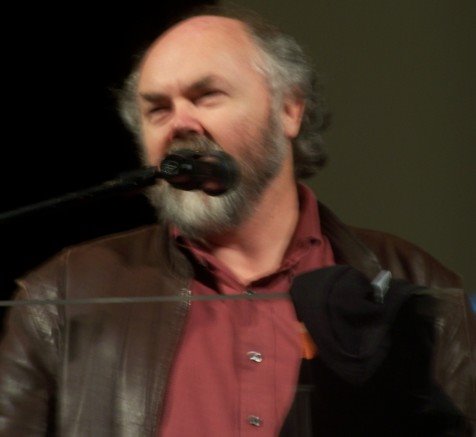
Tim Costello, speaking at the Melbourne Town Hall, 9 April 2006

God; politics right, left & centre; and the Wallis & Costello show

So you think that all Christians vote for right wing parties and think of political issues in terms of abortion, RU486, gay marriage and pornography. Not so. But, unless you follow the political processes of Australia quite closely, it can be hard to detect faith-based politicians and activists who take a broader view. They are there - and across party lines. Miss Eagle thinks of Bruce Baird in the Liberal Party and Claire Moore in the Labor Party who was one of that small group of women in the Senate who led the successful charge to make RU486 available to Australian women. There are others - but they are few. Not surprising really because, as a generality, Australians don't wear their faith on their sleeves as people do in the USA. Not that there aren't similar difficulties of awareness for broad-viewed people in the Republican and Democratic parties of the U.S.

How refreshing it is when one comes across US citizens of faith who don't support the Iraq war, who put the fight for poverty, justice, and equity above the abortion debate, and speak out on the biblical basis for these views. Such a person was in Melbourne yesterday: Jim Wallis of Sojourners. Jim, hosted by Micah Challenge and introduced by Micah Challenge International Council member and Tear Fund Executive Director Steve Bradbury, spoke yesterday at the Melbourne Town Hall.
Also speaking in support of Jim was World Vision's, Tim Costello.


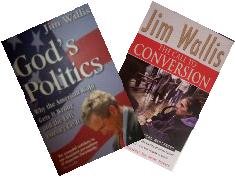
Jim is in Australia promoting the Australian edition of his book, God's Politics: why the American Right gets it wrong and the left doesn't get it.

Tim Costello wrote the Foreword for the Australian edition. Quotes

How did Jesus become pro-rich, pro-war and pro-America alone?

The good news is that the monologue of the right is over...Dialogue is always better than a monologue.

There are two great hungers in our world today, one for spiritual integrity and the other for social justice. And the connection between the two is the one the world is waiting for.

The churches ask for the edges of people's lives, and that's what they get, the edges. A whole generation of young people are looking for an agenda worthy of their energy and gifts, something big enough to give their lives to.

If I'm an unborn child I should stay unborn. Once I'm born I'm off the radar screen of the religious right - no child care, no support for mothers. It's pro-birth, not pro-life.

The choice is between hope and cynicism.

Cynicism is a buffer against commitment.

Hope is not a feeling nor a state of mind. Hope is a choice, a decision we make because of faith.

We are the ones we have been waiting for.

For a review of God's Politics which points out flaws as well as applauds, read Elizabeth Castelli's critique at Slate.

Sunday, April 09, 2006

Seasons of the soul: Holy Week 2006


Miss Eagle marks the seasons, keeps the traditions, believes in the rituals. To-day marks the beginning of Holy Week for Christians in the western tradition. The eastern and western traditions of the Christian Church mark Easter differently on their calendars. Next year the two traditions will co-incide and share the same date for Easter, but in 2006 the west will mark Easter of April 16 and the east will celebrate on April 23.

Holy Week is the most sacred time in the Christian calendar. No, the most sacred time is not Christmas. Christmas might be the biggest time on the commercial and corporate calendar - but not on the Christian calendar. It is of great importance - but not as important as the things that are remembered this week.

To-day is known, generally, as Palm Sunday. While the whole of Lent is a period of reflection, reflection this week becomes more sombre as some very dramatic events are remembered: events with the capacity to change the lives and outlooks of human beings. Thursday is Holy or Maundy Thursday, Friday is Good Friday, Sunday is Easter Day.

In recent years, Palm Sunday has become a focus for public reflection on issues of peace and justice. In Melbourne, this public reflection will be held at the Melbourne Town Hall with a special guest, Jim Wallis, and Tim Costello.

To-day, palm fronds in one form or another will be handed out at Christian Churches. One old tradition is the weaving of palm leaf into crosses. For instructions on this ancient Christian craft, see here.

Friday, April 07, 2006

The Prophetic Voice of Vinnie's

While I listened to the ABC's Religion Report on Wednesday 5 April, I thought I could hear Helen Coonan in the background marking down the ABC's Budget. Stephen Crittenden interviewed John Falzon, Operations Manager for one of Australia's biggest charities, the St Vincent de Paul Society. Falzon's interview was a tour de force and is worth listening to. For those of you who can't listen to it, or would like a permanent record, here it is. Fasten seat belts. Hold on to your seats.

The St Vincent de Paul Society says the Federal Government’s new breaching regime for people on welfare is immoral. Under the scheme, people who are breached but deemed to be extremely vulnerable, will be referred to the churches and charitable organisations to receive one-off payments of up to $650 to manage their cases.
Dr John Falzon is the National Operations Manager for the St Vincent de Paul Society.
John Falzon: Under the new Welfare to Work legislation, two major groups of people are going to be brought within the scope of the breaching regime. That’s people in receipt of parenting payments, especially single parents, but not exclusively, and also people with disabilities who are able to work more than 15 hours a week. Now when these people are breached, there are going to be some cases judged by Centrelink as being extremely vulnerable, and they are going to be referred to agencies that have taken up a contract to case manage the extremely vulnerable, and those agencies are going to give assistance in packages of up to $650 of government funds to the people who’ve been breached.What’s Vinnie’s position on this? Well, No.1 we consider the entire breaching regime to be unconscionable and immoral. It takes away dignity, it doesn’t offer hope, it doesn’t act as a mechanism for really enabling people to move from welfare to work. It punishes people who are already vulnerable, it deprives people of their human rights, of their dignity, of bread on the table for children in many cases.
Stephen Crittenden: And you’re not having any part of it.
John Falzon: Exactly. We’ve always held that position and as far as this idea of institutionalising charity and making people feel an even greater sense of humiliation in that even though the government is acknowledging that they’re going to be in a dangerous situation and is funding this period of crisis, it’s going to do so via a charity, to make people feel that the charity is being institutionalised and they’re being forced to go to a charity.
Stephen Crittenden: Yes, I don’t really understand what’s in it for the government. They aren’t really getting people off welfare, and even though the churches are looking after them, the government’s still going to be paying.
John Falzon: Yes, it’s more symbolic I think in this case. That’s what we really find unconscionable, that this is a return to some very old models of charity as being a means of really making people feel like they are to blame for their poverty. There’s a whole moral discourse involved here that we will have no part of. You know the wonderful educational theorist, Paulo Freire, and we really take his lead in Vinnie's, when he spoke very beautifully about needing to engage in a prophetic denunciation of the bad news, in order to engage in a prophetic annunciation of the good news. We denounce the breaching regime as bad news, there is no good news in any element of it. We do announce the good news that there is an alternative vision for Australia, and that’s one of our major concerns with this Welfare to Work legislation which some of our members refer to as Welfare to Work to Welfare - because in fact we don’t believe it’s going to have those sorts of positive outcomes that everyone would hope for. We believe that it lacks vision. Not only does it lack fairness but even from an economic rationalist point of view, it lacks strategic vision, and as the Book of Proverbs says, ‘Where there is no vision, the people perish’. Well where is the vision in pushing people who are vulnerable into that low end of the labour market without any adequate opportunity for skilling, for education, at a time when most commentators will acknowledge we’re facing a skills crisis, at a time when Australia can in fact have a competitive edge, by investing in education skills and innovation.
Stephen Crittenden: Presumably some of these people are still going to be coming to you for help, whether the government’s reimbursing you or not?
John Falzon: That’s true, absolutely, and Vinnie’s will never cease giving assistance to people who have been breached, and they will continue to come to us. We won’t be accepting government money to do that, we won’t be entering into a contract, but what we’ve always maintained is yes we will give the charitable assistance, we will be there as a charity because we consist of so many wonderful people who are giving up their time to do that, and because they believe in a fair go.
Stephen Crittenden: Doesn’t that let the government off the hook?
John Falzon: Well there’s the second part of the equation. We’ll give the charity to people but what we have always maintained is charity is fine, but what these people deserve is justice, and we’ll keep clamouring for that justice.
Stephen Crittenden: The Salvation Army says it will probably take up this proposal. The St Vincent de Paul Society says the breaching regime is immoral and you won’t have any part of it. Shouldn’t the churches be at one on this issue?
John Falzon: Well our position as far as – I’m not commenting on churches, but I will comment on agencies – we have taken the position quite rightly in my opinion, that we in no way wish to give any direction or call to other agencies as to how to conduct themselves. They must follow their own charters, their own rules, their own rationales for how to engage in this quite vexed social policy area.
Stephen Crittenden: But if you’re calling the government immoral, surely the implication is another church welfare agency who takes part in this immoral regime is participating in immorality if you like.
John Falzon: Well, as I said, we’re not commenting on the decisions of other agencies as to how they engage in this entire process, but for Vinnie’s our message is clear: in our rule as a matter of fact, it says where injustice, inequality, poverty, or exclusion are due to unjust economic, political or social structures, or to inadequate or unjust legislation, the society should speak out clearly against the situation, always with charity with the aim of contributing to and demanding improvements. For those people who might think that’s quite strongly worded, it’s not nearly as strongly worded as those words from the Prophet Isaiah, ‘Woe betide those who enact unjust laws and draft oppressive legislation depriving the poor of justice, robbing the weakest of my people of their rights, plundering the widow and despoiling the fatherless.’ That’s where we take our lead from, Stephen, we’re placed in a position by our members because of what they see every day in giving assistance to the people who come to us.
Stephen Crittenden: Let’s turn to a couple of other related welfare issues. Vinnie’s is also particularly concerned about what you’re describing as the nexus between the government’s Welfare to Work legislation and the new IR legislation.
John Falzon: Yes. Look, what we see is that the people who are going to be pushed by the Welfare to Work legislation into that low end of the labour market, are also the people conceivably, who will be subjected to compliance with Australian workplace agreements that potentially will not be family friendly, that will be deleterious to family life. We’ve actually received some legal advice to suggest that there may be a case whereby the provisions in the Welfare to Work legislation can contribute to coercion of sole parents to breach their duty of care to their children which is potentially a criminal offence.
Stephen Crittenden: But you’re also suggesting that the Welfare to Work legislation won’t just have the effect of pushing single mothers say back into the lower end of the workforce, it will also have the effect of pushing them on to individual contracts, which may be deleterious to them.
John Falzon: Conceivably, yes. We’re not in any way saying that that is necessarily going to be the case, but it is certainly on the cards as far as we can see, that that’s precisely where Australian Workplace agreements will be put in place, and who knows what kind of conditions will be removed from those working arrangements, particularly where children are involved.
Stephen Crittenden: OK, just finally, Dick Warburton and Peter Hendy, two Australian businessmen, have this week presented the Federal government with their review of Australia’s tax rates. And the Prime Minister has said that his first priority in this year’s budget is support for lower middle-income families. What is St Vincent de Paul Society saying about tax reform?
John Falzon: What we’re saying No.l is that the Treasurer is quite correct in citing the OECD figures that we’ve got the eighth lowest tax to GDP ratio, and that we’re the second-lowest spending amongst the OECD countries. We have always considered two major points as far as the debate on tax reform. 1. is that the effective marginal tax rates that affect precisely the people moving from Welfare to Work are incredibly high, up to the 70% mark and this acts as a major disincentive for people moving from Welfare to Work.
Stephen Crittenden: Labor’s Wayne Swan is saying this, too, this week.
John Falzon: Yes, quite right. Secondly though, we have always maintained that the far greater deficit in Australian society is not so much in terms of the need for tax cuts, it’s in terms of our under-investment particularly in social infrastructure, particularly in the costs that hit low income households, and middle income households in areas of education, health, transport, housing, child care, these are the sorts of costs that impact heavily because it’s a matter of shifting from the public purse to the private pocket. We would dearly love to see an intelligent and strategic investment in these areas of Australian society rather than putting a few dollars into people’s pockets, because this would have not only a great effect on those individual households, but as a whole, collectively as a nation, it would enable us to go forward and would stand in opposition to the narrow-minded punitive welfare reforms and IR reforms that we’ve seen.
Stephen Crittenden: John, thanks very much for being on the program.
John Falzon: Pleasure, Stephen.
Stephen Crittenden: You don’t often hear a Catholic who can quote the Bible. Dr John Falzon, the National Operations Manager for the St Vincent de Paul Society.

Thursday, April 06, 2006

Good on you, Tegan - but remember CH

In recent years, Australia has watched in horror two rape proceedings. One which had as its central figure Bilal Skaf. The other involved men who have had their names suppressed. I find this of particular regret. Each of the two rape proceedings involved men of Muslim background. Each of the two proceedings appeared to have racial overtones involving the denigration of Australian women of European descent. The NSW Government - in whose jurisdiction the legal proceedings took place - were forced to change laws and the way victims gave their testimony because people involved in these cases, quite simply, had no respect for the law let alone the people whom they had raped. One disappointing factor in the case mentioned here is that the father of the men involved has not been held to account before a court or tribunal for his statements. He, a medical practitioner, is alleged to have excused his sons by saying that they did not understand Australian cultural standards. Was he trying to tell us that this society in which he has chosen to live and to bring his family to live supports rape and violence? He, a medical practitioner, is alleged to have said - on seeing the videos of the rape and violence taken by his sons - that one of them would have made a great gynoecologist. What blame attaches to this man for the rape and violence committed by his sons? What penalty does he face?

I congratulate Tegan for her ability to stand tall and not allow herself to be brought low by those who sort to denigrate her in the ultimate way short of death. However, let our thoughts never be far from CH. She never felt able to attend court, and wrote in a victim impact statement: "My own regret in relation to my lost dreams is a constant torment."

Wednesday, April 05, 2006

Scott Parkin

Deep in the September 2005 archives of The Eagle's Nest, the dedicated reader will find Miss Eagle's posts relating to Scott Parkin. Now there is further news. Scott Parkin has begun a case in the Federal Court of Australia in Melbourne in an attempt to force the Australian Government to reveal the reasons why he was deported. Anne Gooley who is acting for Scott in this matter, said:
"This is a broader issue than just Scott. This is the issue of whether people are entitled to have these decisions made without any opportunity to scrutinise them."

Medibank Privat-ised?

Warwick Hatfield - who rattles quickly through all the sporting news on RN's Breakfast every morning from Monday to Friday - is nothing if not a wit - and, at the speed at which he delivers his news, you have to be quick on the ear and the uptake.

To-day, Warwick fitted in his comment on the decision by the Howard Government to privatise Medibank Private in two words: Medibank Privatised.

Oh Warwick, we hope not.

Tuesday, April 04, 2006

The Dalai Lama: comment and wisdom

The Telegraph (that's the London one, not the Sydney one) is carrying a long article and interview with the Dalai Lama. In the interview the Dalai Lama said two things of particular interest.

The first is about us:
The West's big problem, he believes, is that people have become too self-absorbed. "I don't think people have become more selfish, but their lives have become easier and that has spoilt them. They have less resilience, they expect more, they constantly compare themselves to others and they have too much choice - which brings no real freedom."

The second is about handling The West's greatest external collective fear:

Terrorists, he warns, must be treated humanely. "Otherwise, the problem will escalate. If there is one Bin Laden killed today, soon there will be 10 Bin Ladens. Awesome. Ten Bin Ladens killed, the hatred is spread; 100 bombed, and 1,000 lose members of their families."

Vote NO to the sale of Medibank Private


IMMEDIATELY
VOTE NOW
The Age is having a vote on the sale of Medibank Private.
These votes do not go on forever.
Please go to
and
VOTE NO, NO, NO

Learn from history to protect everyone's freedom


Every act of discrimination by our Parliament and governments dishonours our nation.
We honour the memories recorded in this book most worthily
when we resolve to respect
the freedoms and dignity of all people and to be vigilant for our own.
at the launch of an anthology of the memories of child survivors of the Holocaust.
Let us remember! Let us learn!

Monday, April 03, 2006

Globalization: dark and democratic?

Nothing comes without a price, says Paul Sheehan on globalization. And he outlines the price quite clearly:
  • erosion of working conditions,
  • a rising gap between haves and have-nots,
  • a looting of community assets by fee-gouging financial brigands,
  • a siphoning of corporate profits by overpaid executive bedouins, and
  • the loss of entire industries shipped offshore, mostly to China.

His final question puts the English-speaking world in its place.

Are you any more deserving than a young Chinese worker desperate to get out of poverty?

Owning up and going from there

Boyd over at Non-violent Jesus has a great post on what we - and particularly those of the we who are Christians - should be doing. His post is out of the USA and relates to that nation's involvement in the war on Iraq. Miss Eagle has long advocated similar principles in Australia in relation to this nation's handling of reconciliation with the people of the First Nations and in the matter of refugees, asylum seekers, and immigration policies.

" 'Fess up!", Miss Eagle says. Come to grips with the truth about ourselves, our actions, our motivations. Then - and only then - can we move forward into new and creative policies and solutions. Christians, if we are worth our salt - or, as the good news says, if we are the salt which has not lost its taste and flavour - should stop shilly-shallying and being mealy-mouthed and lead the way in this direction. The principles espoused can be used on a number of fronts.

  1. Honesty, self-criticism, confession.
  2. Contrition, repentance, making amends, setting things right.
  3. Reformation in our actions and ways of doing things. New actions. New attitudes.

These are principles that can be taken onto a number of fronts. Not only in the matter of war and peace. Not only in the matter of asylum seekers and hospitality. But also in the matter of the new workplace legislation. Miss Eagle has said harsh words, particularly about the Howard Government, in all this. But if Miss Eagle is to be honest, the most satisfactory result for all with justice for all - employers, employees, business and community - will involve reconciliation. And Miss Eagle has to say that the state jurisdictions - at least the one in which she worked in Queensland - have strong conciliaton processes, and the word 'conciliation' is in the title of the governing industrial relations tribunal.

But - most Christians sitting in pews do not seem to have a clue about industrial relations or the issues involved. In most parishes or congregations of most denominations, industrial relations is barely a blip on the agenda. In fact, some denominations have poor track records themselves in industrial relations. Yet the current state of industrial relations in this nation has the capacity to rend asunder community values and traditions with no significant benefit or enrichment to either. So, in the name of Christ, Christians, what are you doing?

Higher than the Berlin Wall, Jerusalem becomes a medieval walled city once more

Miss Eagle has posted before on the build-your-own-ghetto mentality which appears to prevail in modern Israel. Robert Fisk explains how the recent elections will not restrict the Israeli landgrab - but will endorse and encourage further hegemony by Israels on land held by Arabs.

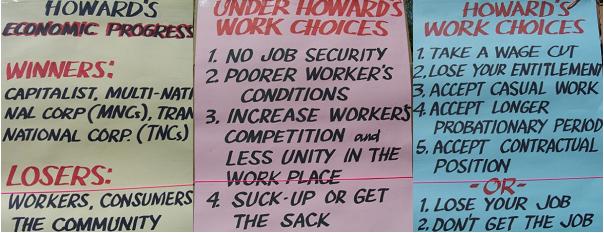
Is this how the Howard Govt makes us feel?

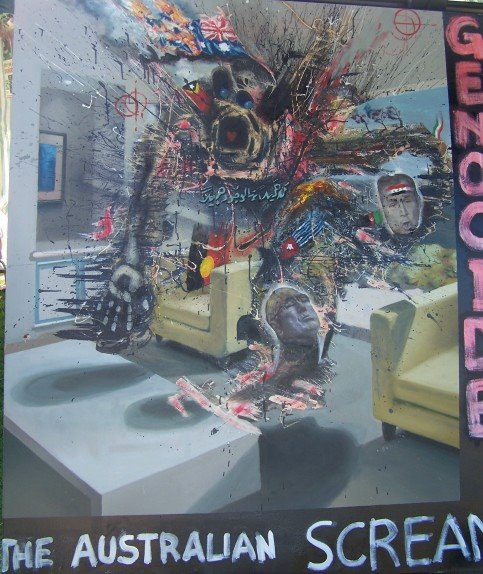
Art came tothe Solidarity Picnic yesterday

What are you doing this Easter: worshipping, working or playing?

Barnaby Joyce claimed to have saved Good Friday and saved Christmas Day for workers as a condition of passage of the Howard Governments draconian industrial relations laws through the Senate. Jill Murray is a party pooper. She has cast doubt on Backdown Barnaby's claims. So if you see yourself pitching your tent with the family at Rosebud next week with all those other Victorians who treat Easter as the last proper holiday time before winter sets in, better check with your boss first. The last week as shown that quite a few employers want to get in early to make the most of the Howard and Andrews gift to employers. The first public holidays since the legislation came into effect on Monday 27 March will provide a further test to the venality of employers. How many employees who otherwise would not have worked over the Easter holidays will be co-erced or feel co-erced into working these days and thus taking them away from worship, from their families, from recreation. And how many executives, managers, owners will work this Easter when otherwise they would not? A miniscule number, I venture.
So check with the boss - but don't forget Barnaby. If the boss won't let youo have Easter to yourself and you will be working on Good Friday and/or Easter Monday, let Barnaby know. Here are his contact details. I doubt he'll be in St George though. I think it's an each way bet on either the Gold Coast or the Sunshine Coast.
Any Barnaby watchers out there might like to let Miss Eagle know.

The struggle and the protests continue - 2

Image hosting by Photobucket
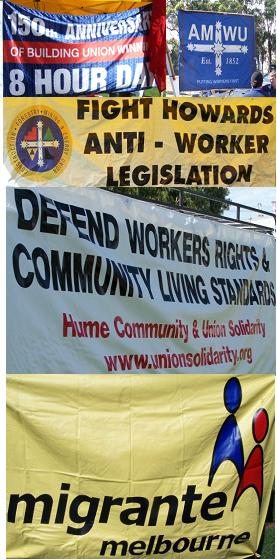
The Northern Communities and Union Solidarity Group are planning a Family Day and March on May Day Eve, Sunday 30 April 2006. It will be held at 1pm - 3pm (plenty of time to go to church first) from 1.00pm to 3.00pm at the Town Park at Pearcedale Parade, Broadmeadows. If you want more information please call Wayne on 0438 304 326.

The struggle and the protests continue - 1

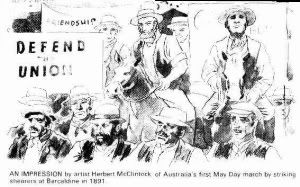
Yesterday, the protest continued. This time in the western suburbs of Melbourne at Yarraville Gardens at the Solidarity Picnic organised by the Western Suburbs Community & Unions Coalition. Those who fronted up to entertain and speak included comedian Corinne Grant who compered the event; Sharan Burrow (President ACTU), Phillip Huggins (Anglican Bishop), Cath Smith (Victorian Council of Social Services), Kevin Bracken (State Secretary, MUA), Michele O'Neil (State Secretary, TCFU), Janet Rice (Mayor, Maribyrnong Council) ; Chris Wilson, The Band Who Knew Too Much, Crawfish Dave, Sudanese Women Dancers, Indigenous Performers, and Sweet Cheeks. The Solidarity Picnic was endorsed by the Victorian Trades Hall Council, the Victorian Council of Churches, the Victorian Council of Social Service, and numerous individual unions, community and welfare groups, including Job Watch, Liberty Victoria, Western Suburbs Legal Service, Federation of Community Legal Centres, and Women's Health West.
Yarraville Gardens, the picnic venue, is beautiful. It was a great day for families, kids, dogs and protest.

Sunday, April 02, 2006

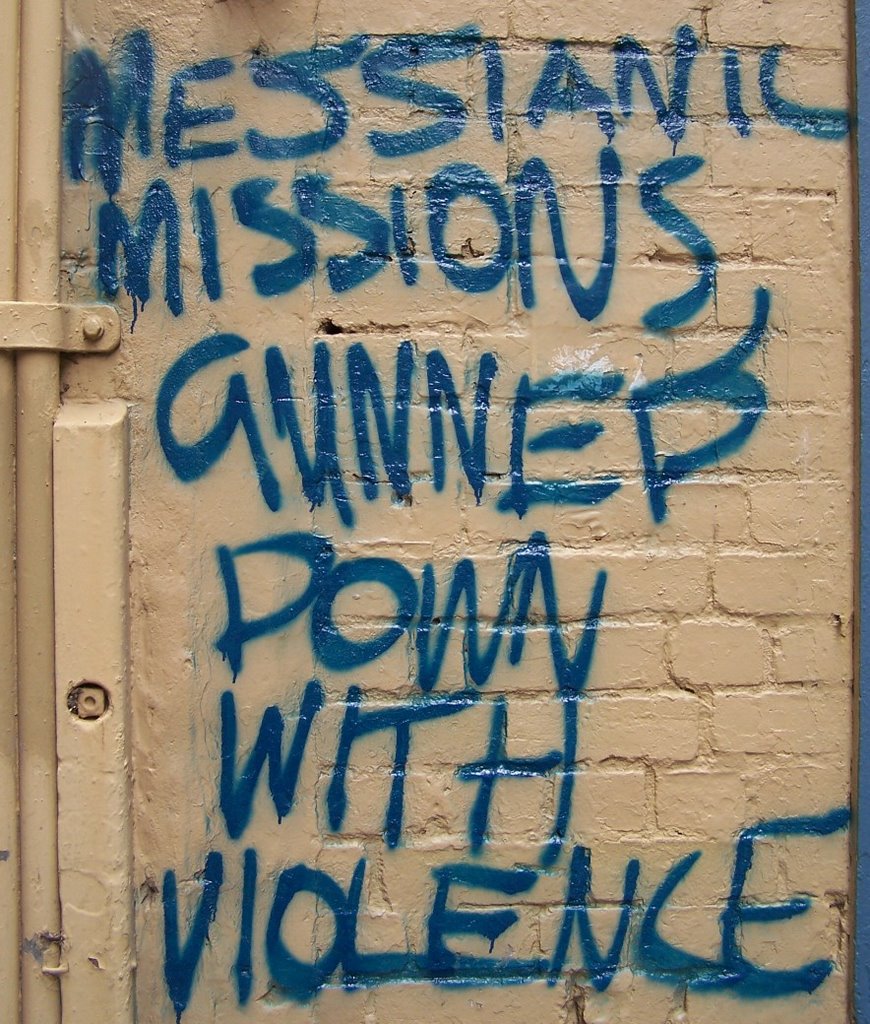
A Lenten message?

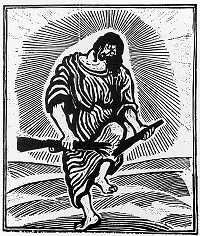
Graffiti in a lane off Little Collins Street, Melbourne, between Queen & William Streets